
Imagine beginning your workday by noticing droppings near a supply cabinet or an insect along a window frame. It may seem like a small issue, but the concern can grow quickly when employees and customers start to arrive.
Fall pest pressure can look different across California, where coastal, inland, and desert areas may experience different seasonal conditions. In some locations, cooler nights can increase rodent activity around buildings, while lingering warm weather can allow insects to remain active later into the season. A fall commercial pest prevention plan helps businesses identify entry points, sanitation concerns, and other risk areas before pest activity spreads.
How Daily Operations Can Increase Fall Pest Risks
Once seasonal pest pressure begins, the way a property operates often determines where pests find food, water, and shelter. An office in L.A., a restaurant in San Diego, and a warehouse in the Bay Area may operate under different fall conditions and day-to-day routines, but receiving areas, waste zones, break rooms, and undisturbed inventory can all become problem spots.
A practical plan for pest control for commercial buildings should reflect how the property operates each day. Reviewing where deliveries enter, where waste is held, and which areas receive less attention helps employees and technicians focus inspections on the places most likely to support pest activity.
Start With the Exterior Before Pests Move In

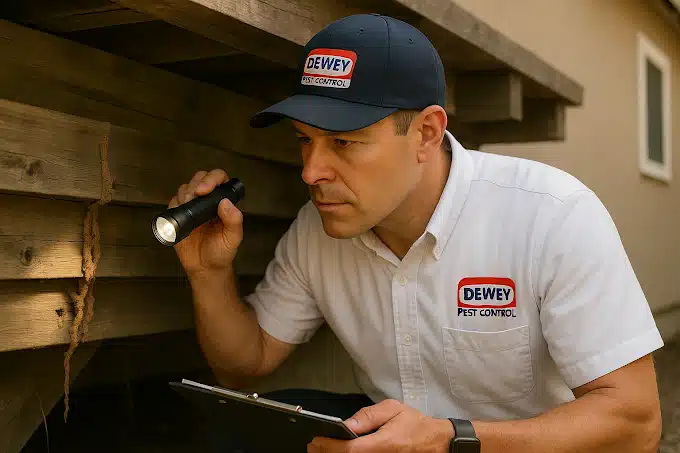
Once daily risk areas have been identified, the next step is to inspect the building exterior. Gaps around doors, vents, pipes, and rooflines can give rodents and insects a way inside, especially when seals are damaged or exterior maintenance has been delayed. In parts of California where nighttime temperatures begin to decline, these openings can become especially important to address as rodents look for sheltered areas around commercial properties.
Focus the exterior review on these areas:
- Close exterior doors and check for daylight beneath or around the frame.
- Examine door sweeps and weather stripping for cracks, gaps, or worn sections.
- Inspect openings around plumbing lines, electrical conduit, vents, and utility connections.
- Look for torn screens, loose siding, foundation cracks, and gaps along the roofline.
- Trim vegetation touching the building and move cardboard, pallets, standing water, and debris away from the foundation.
Closing these openings can limit the paths mice and rats use to enter. When droppings, gnaw marks, rub marks, or damaged seals point to an active problem, our rodent control for businesses can help locate entry points, nesting areas, and other conditions contributing to rodent activity on the property.
Keep Sanitation Consistent Throughout the Workday
A clean lobby does not show what may be collecting beneath equipment, around floor drains, or near waste containers. Crumbs, grease residue, unsealed ingredients, and dumpster lids that do not close completely can support pest activity in areas customers rarely see. In California markets where warm weather lingers into fall, late-summer ant activity may continue, while flies can remain active around dumpsters, drains, and food-service areas.
Restaurants require close attention to kitchens, receiving areas, and waste storage. Regular inspections are part of our pest control for restaurants, helping uncover signs of activity in areas that may be missed during routine cleaning. Staff can support that work by cleaning beneath appliances, rotating stock, sealing ingredient containers, checking incoming deliveries, and removing trash on a set schedule.
Food left in break rooms, shared kitchens, desks, or lockers can create similar concerns in schools and offices. Through our pest control for schools and offices, technicians check for pest activity and possible entry points, while a written cleaning schedule and pest sighting log help employees report problems and allow managers to track recurring concerns.
Give Loading Docks and Storage Areas a Closer Look
Loading docks can be difficult to monitor during busy receiving periods. Doors remain open while pallets are unloaded, and cartons may enter storage before anyone notices damaged packaging or signs of pest activity. Stored-product pests can also be associated with incoming inventory and deliveries, making it important to inspect packaged goods before they move farther into storage.
A receiving checklist puts warehouse pest prevention strategies into practice by prompting employees to inspect pallets, cartons, and packaging before products move farther into the building. Staff should remove unneeded cardboard, leave clear inspection space between stored materials and walls, and look beneath shelving or behind equipment for droppings, shed insect skins, gnaw marks, or nesting material.
Schedule Commercial Pest Control Before Fall Activity Increases

A pest sighting during business hours can disrupt employees, customers, and daily operations. Scheduling an inspection early gives the technician time to assess the property and plan service around receiving hours, food preparation, customer traffic, or occupied areas.
Regular follow-up visits allow technicians to adjust commercial pest control services as conditions change. This helps make commercial pest control part of routine property maintenance instead of a response to the next visible problem.
Prepare Your Business for Fall With Dewey Pest and Termite Control
Fall pest pressure does not have to catch your business off guard. Dewey Pest and Termite Control helps California businesses take a proactive approach with commercial service based on the property, industry, and daily operations.
Contact us online to discuss your property and schedule service before seasonal pest activity becomes a larger concern.