

Imagine your dog coming inside after an afternoon in the backyard in Elk Grove, a walk along the American River Parkway in Sacramento, or a hike on a neighborhood trail anywhere from the Bay Area to the Inland Empire. No limping, no visible bites, no obvious sign that anything happened. But somewhere over the course of that hour, a mosquito landed, fed, and flew away.
Depending on what that mosquito was carrying, what it left behind could quietly take months or even years to make itself known. That’s how heartworm works; one bite is all it takes. The American Heartworm Society estimates that at least 1.1 million dogs in the U.S. are currently infected with heartworms, and the parasite has now been documented in all 50 states. Keep reading to learn about how mosquitoes cause heartworm in pets and helpful tips for mosquito control across California from the pros at Dewey Pest and Termite Control.
How Do Mosquitoes Give Dogs Heartworm?
The heartworm life cycle in pets starts not with your furry friend, but with another infected animal, usually another pet or wild canid like a coyote. When a mosquito bites an infected animal, it picks up microscopic larvae called microfilariae. Over the next 10 to 14 days inside the mosquito, those larvae develop into their infectious stage.
The next time a mosquito bites your dog, it deposits the infectious larvae into the wound. From there, the larvae begin migrating through your dog’s tissue over the following months, eventually reaching the bloodstream and traveling toward the heart and pulmonary arteries. By the time they arrive, they have matured into adult worms that can grow up to 12 inches long.
According to the CDC, more than 60 species of mosquitoes across the genera Aedes, Anopheles, and Culex are capable of transmitting Dirofilaria immitis, the parasite responsible for heartworm. A single dog can host dozens of worms. Some have been found to carry more than 250.
Timeline For Heartworm in Pets
This is the part that catches most pet owners off guard. Heartworm disease is slow. There are no symptoms at first. Dogs with heartworm disease can look and act completely normal for months while the worms travel and grow.
The heartworm life cycle from initial infection to detectable adult worms is approximately six months. That is why annual testing exists. A dog can be bitten in the spring, test negative in the fall because the worms are not yet detectable, and be showing signs of cardiovascular stress by the following year.
By the time dogs show symptoms, the disease has usually progressed to a stage that is harder to treat and more difficult to reverse.
Symptoms of Heartworm in Pets 2026
Heartworm is a serious parasitic disease that affects pets, spreading through infected mosquito bites and taking hold gradually in the bloodstream. While dogs are the most common hosts, other animals can be affected as well. Early detection matters because symptoms often go unnoticed until the disease has already progressed, a sign of the importance of year-round heartworm prevention in California.
Symptoms of Heartworm in Dogs

Early heartworm symptoms in dogs are easy to miss. A mild, persistent cough, low energy, and reluctance to exercise are often the first indicators. As the infection advances, signs escalate to labored breathing, a swollen abdomen, and chronic lethargy. In the most severe cases, caval syndrome can develop, where worm volume obstructs blood flow enough to cause rapid cardiovascular collapse. Knowing what to watch for can make the difference between a manageable diagnosis and a life-threatening emergency.
Heartworm Symptoms In Cats
Symptoms of heartworm in cats present differently and are often misdiagnosed. Because cats are atypical hosts, the worms rarely survive to adulthood, but even a small number of larvae can trigger a serious inflammatory response in the lungs. Heartworm-associated respiratory disease in cats is frequently mistaken for asthma. Sudden death without prior symptoms is also possible in cats, which is why prevention matters even if your cat stays primarily indoors.
California Heartworm Risk Map
Heartworm was once considered a disease of the Gulf Coast and Southeast. That is no longer accurate. The American Heartworm Society’s most recent incidence survey shows expanding moderate-incidence zones across Southern California and the Central Valley, with cases also climbing in counties along the coast and in the foothills. The AVMA reports that nationwide incidence has continued to rise despite advances in preventive medication, driven in part by warming temperatures and the spread of new mosquito vectors.
California’s climate and geography contribute to that trend. The Sacramento Valley in particular creates conditions that support large mosquito populations, with its network of rivers, irrigation canals, wetlands, and urban drainage supporting breeding populations through much of the year. Similar pressures exist across the wetlands and irrigation networks of the Central Valley, the riparian corridors of the San Joaquin watershed, the canyon neighborhoods around Los Angeles, and the date palm groves of the Coachella Valley. In mild winters, mosquito populations can persist effectively year-round throughout the state.
Why Traditional Timing No Longer Works
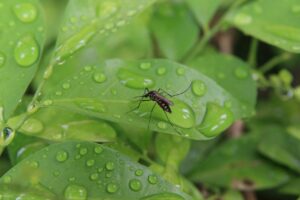
For years, the standard advice was to keep pets inside at dawn and dusk when mosquitoes are most active. That guidance was written around the behavior of the common Culex mosquito, which does follow those patterns.
Invasive Aedes mosquitoes in California in 2026 now present a different problem. According to the Mosquito and Vector Control Association of California, invasive Aedes mosquitoes were first detected in the state in 2011 and have since become established in more than two dozen California counties and 300 cities and towns.
Species like Aedes aegypti and Aedes albopictus are aggressive daytime biters that are far less deterred by repellents than native species. They are smaller, harder to notice, and more persistent. The CDC notes that Aedes mosquitoes can complete a full lifecycle in as little as a bottle cap of water, making them difficult to eliminate through standard yard maintenance alone.
Mosquito bite prevention for dogs and cats now needs to account for midday outdoor time, not just early morning and evening hours.
Heartworm Prevention vs. Heartworm Treatment
Heartworm prevention medications are inexpensive, widely available, and highly effective when given consistently. Monthly oral preventives or injectable options prescribed by a veterinarian interrupt the heartworm life cycle before larvae can establish.
Treatment for an active heartworm infection is another matter entirely. The process typically involves multiple veterinary visits, strict activity restriction, injectable medications that carry their own risks, and costs that often run into the thousands of dollars. Dogs recovering from treatment must be kept from exercise for weeks to months because dead worms carry the risk of clotting and pulmonary embolism.
Heartworm prevention is safer, cheaper, and easier on your pet by every measure.
Prevent Heartworm With Mosquito Control
Year-round heartworm prevention in California that pet owners can rely on includes consistent medication from your veterinarian. It also requires work on your end, as reducing mosquito pressure around the property where your pets spend their time can make a big difference. Local resources like your county mosquito and vector control district can also help homeowners identify problem areas and report invasive Aedes sightings.
Expert Mosquito Control in Sacramento and Beyond
Dewey Pest and Termite Control provides mosquito control services for California pet owners across the Greater Sacramento area and statewide. Our recurring barrier treatments reduce active mosquito populations on your property throughout the season. All products are applied according to EPA-approved label directions by trained, licensed technicians, targeting the areas where mosquitoes rest and breed.
We provide mosquito control in Sacramento, Fresno, Modesto, Palm Springs, Bakersfield, and many more communities throughout the Golden State. Contact our team or give us a call to schedule your free inspection and ask about our recurring seasonal treatment plans!